
Panic Attack vs Anxiety Attack: What's the Difference and How Therapy Can Help
Updated: 12 June 2026 | By: Josh Feeney

Key Takeaways
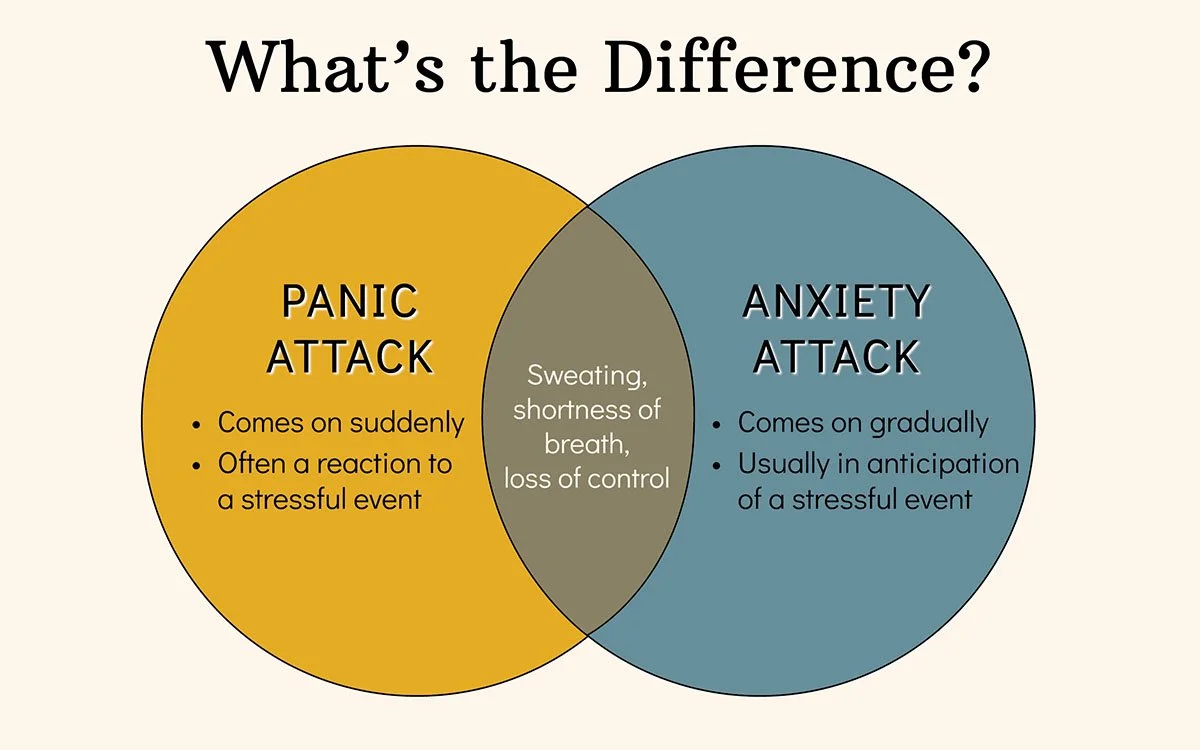
Panic attacks hit suddenly and intensely, with strong physical symptoms. Anxiety attacks build gradually and are usually tied to ongoing stress or a specific worry.
Symptoms can overlap, but the onset, triggers, and intensity of each tend to differ.
Grounding techniques, slow breathing, and self-care can help with both. If attacks start affecting your daily life, it's worth speaking with a mental health professional.

Quick answer: A panic attack hits suddenly and peaks within minutes, often with intense physical symptoms like a racing heart or chest tightness, even without an obvious trigger. An anxiety attack builds gradually, is usually linked to a known stressor, and tends to be more psychological than physical. Both are real, both can be distressing, and both respond well to therapy.
If you've ever felt your heart pound out of nowhere, or noticed worry slowly spiral until it feels unbearable, you've probably asked yourself: was that a panic attack, or an anxiety attack? The two get used interchangeably, but understanding the difference can help you make sense of what's happening in your body and mind, and find the right kind of support.
Trigger warning: This article discusses anxiety and panic attacks. If you're feeling overwhelmed right now, support is available. Call Lifeline on 13 11 14 or Beyond Blue on 1300 22 4636 for free, confidential help.
What Is a Panic Attack?
A panic attack is a sudden surge of intense fear or discomfort that can appear without warning. It typically peaks within about 10 minutes and resolves within half an hour, though the physical and emotional after-effects can linger much longer.
Panic attacks are more common than most people realise. According to the Australian Bureau of Statistics' 2020-22 National Study of Mental Health and Wellbeing, anxiety disorders, which include panic disorder, are the most common group of mental disorders experienced by Australians, affecting an estimated 3.4 million people in the 12 months prior to the survey. A panic attack can occur on its own, without meeting the criteria for an ongoing disorder, or alongside panic disorder, generalised anxiety, phobias, or PTSD.
What Does a Panic Attack Feel Like?
Panic attacks tend to come with strong physical symptoms, including:
A racing or pounding heart
Shortness of breath or chest tightness
Dizziness, sweating, or trembling
A sense of unreality or fear of losing control
These symptoms can be frightening on their own, and catastrophic thoughts, like believing something is seriously wrong, often make the experience feel even more overwhelming.
What Is an Anxiety Attack?
An anxiety attack isn't a formal clinical term, but it's widely used to describe an intense episode of worry or fear that builds gradually, usually in response to an identifiable stressor like work pressure, an upcoming event, or relationship stress. Whilst there is an overlaps in how they may feel in the moment anxiety and panic are different and understanding how they work, helps us manage them better.
Anxiety itself is a normal part of the body's stress response. The sympathetic nervous system activates a fight-or-flight reaction to help you respond to perceived threats. When this system fires too often, or without a clear cause, it can leave you stuck in a cycle of worry that escalates into an anxiety attack.
What Does an Anxiety Attack Feel Like?
Common signs include:
A pounding heart or tight chest
Quicker, shallower breathing
Persistent worry, often tied to a specific concern
A sense of dread that builds rather than strikes suddenly
Anxiety attacks can last anywhere from a few minutes to several hours, and while generally less intense than panic attacks, they can still significantly disrupt your day.
Panic Attack vs Anxiety Attack: Key Differences
| Feature | Panic Attack | Anxiety Attack |
|---|---|---|
| Onset | Sudden and intense | Gradual build-up |
| Duration | Peaks within minutes | Can last for hours |
| Trigger | Often unclear | Usually a known stressor |
| Symptoms | Strong physical and psychological | Mostly psychological, some physical |
| Recognised in the DSM-5 | Yes | No (anxiety disorders are, but "anxiety attack" isn't a formal term) |
| Often linked to | Panic disorder, PTSD, phobias | Generalised anxiety disorder, social anxiety |
How to Manage a Panic or Anxiety Attack in the Moment

Grounding techniques are one of the most effective ways to bring yourself back to the present moment during an attack.
The 3-3-3 rule is a simple place to start:
Name 3 things you can see
3 sounds you can hear
and move 3 parts of your body
You can extend this to the 5-4-3-2-1 technique, working through all five senses.
If you're supporting someone else through an episode, stay calm and speak gently. Avoid phrases like "calm down" or "snap out of it", as these can make someone feel worse. Instead, gently guide them through slow breathing or a grounding exercise, and let them know they're safe.
How Can Therapy Help With Panic and Anxiety Attacks?
Therapy gives you a space to understand what's driving your attacks, whether that's an identifiable stressor, a pattern of catastrophic thinking, or something connected to past experiences. A therapist can help you build practical coping strategies, work through the root causes, and develop a longer-term plan for managing anxiety so it has less hold over your daily life.
For some people, especially those navigating identity-related stress, minority stress, or the added pressures that come with being part of the LGBTQ+ community, anxiety and panic can be closely tied to feelings of safety, belonging, and self-acceptance. The ABS National Study of Mental Health and Wellbeing found that LGBTQ+ Australians experience higher rates of anxiety and other mental disorders than the general population, often linked to stigma, discrimination, and exclusion. Affirming, identity-aware therapy can make a real difference here, addressing not just the symptoms but the underlying context driving them.
👉 At Tribe Wellness, we offer a free 15-minute intro call so you can explore whether therapy feels like the right fit for you.
When Should You Seek Professional Support?
If panic or anxiety attacks are becoming more frequent, or you feel like you're constantly on edge, it's worth reaching out for support. This doesn't mean something is wrong with you. It means your nervous system is under pressure and could use some help finding its way back to balance.
Here's how different professionals can help:
Therapist or counsellor: Helps you explore the root causes of anxiety or panic, build coping strategies, and develop long-term tools for managing stress.
Psychiatrist: Can diagnose related conditions and prescribe medication if needed, often working alongside a therapist.
GP: A good first step for checking physical symptoms, getting referrals, and starting a mental health care plan.
Frequently Asked Questions
Can you have a panic attack and an anxiety attack at the same time?
Yes. Because the two can share symptoms like a racing heart or chest tightness, it's possible to experience overlapping or back-to-back episodes, particularly if anxiety has been building for some time before a panic attack hits.
Are panic attacks dangerous?
Panic attacks aren't physically dangerous, even though they can feel like something serious is happening. That said, frequent panic attacks can affect your quality of life and are worth discussing with a professional.
How long does it take therapy to help with panic or anxiety attacks?
This varies from person to person, but many people notice a difference within a few sessions as they learn grounding techniques and start to understand their triggers. Longer-term work often focuses on addressing underlying causes for lasting change.
Is anxiety attack a real diagnosis?
"Anxiety attack" isn't a formal term in the DSM-5, but the experiences it describes are real and valid. Anxiety disorders, including generalised anxiety disorder and social anxiety disorder, are recognised conditions that a therapist or psychiatrist can assess and treat.
You're Not Alone
Understanding the difference between a panic attack and an anxiety attack can take away some of the fear of not knowing what's happening to you. Both are real experiences, and your body and mind are doing their best to cope with what they're facing.
If you're ready to talk to someone, book a free 15-minute intro call with Tribe Wellness. We provide LGBTQ+ affirming counselling via secure telehealth across Australia, with no waitlist.
Disclaimer: This blog article is for informational purposes only and should not be considered a substitute for professional medical advice, diagnosis, or treatment. Always seek the advice of your GP or qualified mental health provider with any questions you may have regarding a medical condition.
Tribe Wellness is not an emergency or crisis service. If you need immediate support or feel unsafe because you are experiencing suicidal or self-harm thoughts, please contact Suicide Call Back Service 1300 659 467, Beyond Blue 1300 22 46 36 or Lifeline 13 11 14. For emergency help, call 000.